
Advanced Automotive PTC Heating
Modern vehicles integrate self-regulating PTC ceramic elements across several subsystems at once — not as a single component, but as a heating strategy that shows up wherever fast, fault-tolerant warmth matters.
A modern vehicle rarely uses just one PTC heater — it typically uses several, each sized and formulated for a different subsystem, all built around the same self-regulating ceramic principle.
Why automakers reach for PTC across the vehicle
Traditional cabin heat comes from engine coolant — free waste heat borrowed through a heater core. That model breaks down in hybrids that shut the engine off frequently, in EVs with no combustion heat at all, and in any cold-start scenario where a driver wants warm air before the engine has caught up. PTC ceramic elements fill that gap because they respond almost instantly when powered — full current flows while the element is cold — and then throttle their own output automatically as they approach a target temperature, without needing an external thermostat or control loop to prevent overheating. That mechanism is covered in detail in how PTC ceramic heaters self-regulate temperature.
Where PTC shows up across a vehicle
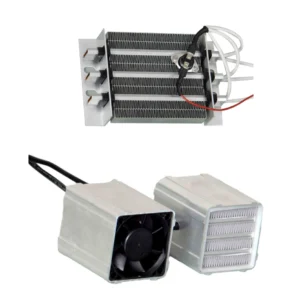
Cabin warm-air heating
A forced-air PTC element sits in the HVAC duct, delivering fast warm airflow before engine coolant is hot enough — the same principle behind a PTC fan heater.
Air Heater products →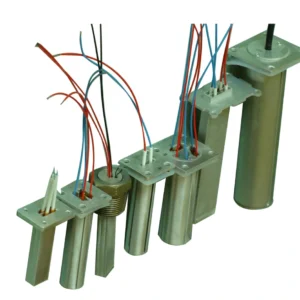
EV battery preheating
A liquid-mounted PTC element in the coolant loop brings the battery pack to a safe operating temperature before fast charging or driving in cold weather.
Liquid Heater products →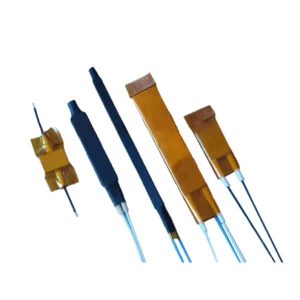
Occupant comfort heating
Flexible, insulation-wrapped elements conform to upholstery and steering wheel surfaces, holding a stable, skin-safe temperature for direct-contact heating.
Insulated Heater products →Cold-start and hybrid supplemental heat
A dedicated booster element covers the gap when engine waste heat alone isn’t fast or reliable enough — common in hybrids and diesels.
What is a supplemental PTC heater →Why this matters for OEM engineering
Automotive heating circuits sit in an environment where a fault has real consequences — a blocked coolant line, a jammed HVAC fan, a stuck-on relay. A fixed-resistance element has no natural ceiling on how hot it can get if heat can’t escape; a PTC element’s rising resistance caps its own output as it approaches its Curie point, which is a meaningful safety margin built into the material itself rather than into a separate control circuit. See is a PTC heater safe for the fuller picture on this trade-off.
Sourcing automotive-grade PTC elements
Automotive programs typically source PTC elements to IATF 16949 automotive quality standards, with target temperature, wattage and voltage specified per subsystem. PTCWORKS manufactures both Liquid Heater and Air Heater architectures for automotive coolant and HVAC applications, alongside Insulated Heater elements for seat and wheel heating. See choosing the right PTC heater type for your OEM project for how to match an architecture to each subsystem, or browse the full product catalog.
PTCWORKS has manufactured PTC ceramic elements since 1993, with certifications available for automotive-grade sourcing. See more real applications on our use cases page, or reach our team directly with your vehicle platform’s requirements.
Building a vehicle heating system?
Send your target temperature, coolant or airflow spec, and voltage per subsystem — we’ll recommend a starting product for each.